The Humanoid Hype Is a Trap. Here’s Where the Real Robot Money Goes.
The Humanoid Hype Is a Trap. Here’s Where the Real Robot Money Goes.
Vitaly M. Golomb & Stefan Krause
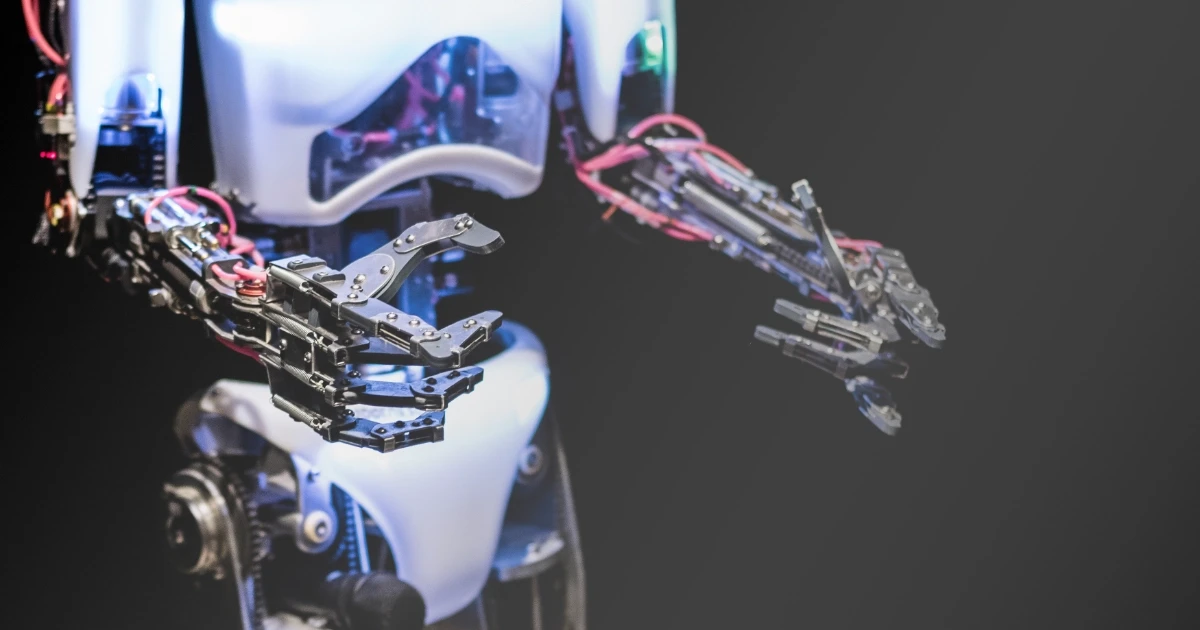
Figure AI just raised $1 billion at a $39 billion valuation. Physical Intelligence pulled in $1.5 billion. The headlines are all about humanoid robots that will walk into your kitchen, fold your laundry, and make you breakfast.
It makes for great demos. Terrible investments.
We’ve reviewed over 2,000 robotics companies per year at Mavka Ventures. We’ve spent 25+ combined years building, funding, and exiting technology companies. And the single most important pattern we see in embodied AI right now is this: the generalist humanoid platforms are absorbing most of the attention, while the specialist vertical robotics companies are capturing most of the value.
70% of new investment capital in robotics is flowing to specialized, vertical solutions. The other 30% goes to general-purpose platforms—and that share is shrinking.
This essay is about why the specialists win, what the real market looks like, and where we think the money should go.
The Humanoid Reality Check
Let’s start with the uncomfortable truth about humanoid robots.
A single humanoid unit costs around $50,000 today. For mass adoption, that number needs to be $5,000–$10,000. That’s an 80–90% cost reduction. Chinese manufacturers are getting close to the $10K threshold and may hit $5K by 2027–2028. But we’re not there yet.
Now look at where humanoids are actually being deployed—not in press releases, but in real commercial settings:
Warehousing and logistics: 63% adoption rate. Proven ROI.
Manufacturing and assembly: 59%. Scaling now.
Hazardous environments: 51%. Strong demand.
Elder care: 24%. Significant gaps remain.
Household chores: 18%. Five to seven years away.
See the pattern? Humanoids work in structured environments—factories, warehouses, controlled settings. They don’t work in your living room. They won’t for years.
The media narrative says otherwise. The media narrative is wrong.
At Mavka Ventures, we invest where the technology is ready and the economics work today. That means vertical-specific robots that do one thing exceptionally well, not general-purpose humanoids that do many things poorly.
The Funding Stampede: $1.8B to $5.8B in 18 Months
Regardless of where you think the value is, the capital flows are undeniable.
Quarterly funding in embodied AI went from $1.8 billion in Q1 2024 to $5.8 billion by Q3 2025. That’s a 3.2x increase in a year and a half. The embodied AI market was $3.06 billion in 2024 and is projected to hit $23 billion by 2030—a 39% CAGR.
The mega-rounds tell the story of where the hype is:
Figure AI: $1B Series C at $39B valuation, backed by Microsoft, NVIDIA, OpenAI, Jeff Bezos
Physical Intelligence: $1.5B Series B for foundation models for robotics
Field AI: $405M for AI-powered construction robotics
Helm.ai: Hardware-agnostic autonomous driving software
But the mega-rounds also tell you where the risk is. These are general-purpose bets at nosebleed valuations. The return profile requires everything to go right.
The more interesting signal is the growth in deal volume: from 89 deals in Q1 2024 to 195 deals in Q3 2025. More companies are getting funded. More founders are entering the space. The ecosystem is thickening.
And crucially, the strategic investors aren’t just writing checks. Microsoft is embedding Azure into Figure AI’s systems. NVIDIA is supplying specialized hardware across the sector. These are platform bets, not financial bets.
When the platform players start building infrastructure around a sector, pay attention.
The Deployment Data Doesn’t Lie
Forget the fundraising numbers for a second. Look at what’s actually happening in the field.
Manufacturing: 30–180% productivity increases. Defect rates reduced by 50–80%. Workplace accidents down 90%. 24/7 operations with 3x capacity utilization.
Logistics: 40–75% efficiency improvements. 12–18 month ROI periods. Labor cost reduction of 30–50%.
Healthcare: Surgical precision at 90% accuracy on repetitive tasks. Hospital-acquired infections reduced 50% through disinfection robots. Staff augmentation addressing a caregiver crisis that’s only getting worse.
These aren’t projections. These are reported results from live deployments.
Global robot installations were up 8% year-over-year in 2023. North America is growing 12% annually. Service robots are the fastest-growing segment at 37% YoY growth.
And here’s the geographic reality that should keep U.S. investors up at night: China installed 276,288 industrial robots in 2023. That’s 52% of the global total. The U.S. installed 55,589. Japan installed 52,257.
China isn’t just talking about the physical intelligence revolution. They’re building it.
The Demographic Crisis That Makes This Inevitable
There’s one macro force driving embodied AI adoption that no amount of hype or skepticism can change: demographics.
Japan faces a shortage of 640,000 caregivers by 2040. The U.S. will be short 11 million healthcare workers by 2030. The global population aged 65+ will grow from 10% to 16% by 2050.
Meanwhile, manufacturing can’t fill jobs. Rising labor costs in developed markets. Persistent skilled worker shortages. Growing need for 24/7 operations that humans simply don’t want to staff.
These aren’t cyclical problems. They’re structural. They don’t reverse with a change in immigration policy or a recession. The population is aging. The workforce is shrinking. The demand for physical labor is growing.
Robots aren’t replacing workers. They’re filling positions that don’t have workers. This is the most important framing shift in the entire sector. When you understand that embodied AI is a labor supply solution, not a labor displacement technology, the investment thesis becomes obvious.
The Five Sectors Where Capital Should Go in 2026–2027
Based on our deal flow, deployment data, and market analysis, here’s where we see the clearest investment opportunities.
Manufacturing Automation ($520B TAM). Collaborative robots, AI-powered quality inspection, specialized assembly systems. The metrics are proven: 30–180% productivity gains, 18–24 month ROI standard. The labor shortage is the forcing function. This is the most de-risked sector in embodied AI.
Healthcare Robotics ($380B TAM). Surgical assistance, rehabilitation, elderly care, hospital logistics. Premium pricing is justified by outcomes improvement. The 640,000 caregiver shortage in Japan alone creates a market that’s desperate for solutions.
Logistics and Warehousing ($290B TAM). Software-first autonomous mobile robots, vision-based picking, Robot-as-a-Service models. 40–75% efficiency improvements with 12–18 month ROI. E-commerce growth provides sustained demand.
Intelligent Mobility ($250B TAM). Autonomous driving software (hardware-agnostic), fleet management, subscription-based ADAS platforms. Companies like Helm.ai have raised $300M+ at $1B+ valuations with 70% gross margins on software.
Defense and Security ($120B TAM). Autonomous surveillance, search and rescue, EOD robots, perimeter security. The Pentagon’s Replicator initiative is funding thousands of autonomous systems. Long-term contracts with recurring revenue and high barriers to entry.
Notice what all five have in common: they’re vertical. They solve specific problems. They deliver measurable ROI. And they’re generating revenue now.
The Valuation Arbitrage Nobody’s Exploiting
Here’s one more angle that makes this sector especially attractive for venture.
AI-native robotics companies—the ones with proprietary data, software differentiation, and continuous learning from deployments—trade at 39x revenue multiples at Series A/B. Traditional robotics companies trade at 15–20x.
That’s a 2x valuation premium for being AI-native versus bolting AI onto legacy hardware.
The implication is clear. If you invest in a company that’s AI-native from inception—computer vision, ML, and foundation models embedded from day one, with continuous learning from operational data—you’re buying into a fundamentally different valuation trajectory.
This is what we look for at Mavka Ventures. Not AI bolted onto legacy hardware. AI-native design. Vertical market focus with deep expertise. Asset-light business models with RaaS (Robot-as-a-Service) potential. Proprietary datasets and fleet learning. And a clear path to 18-month customer ROI.
We target companies at $500K–$2M ARR for Seed and $2M–$10M ARR for Series A. Check sizes of $500K–$3M. We invest in 4–5 companies per year from the top 0.2% of our deal flow.
But what makes us different isn’t the capital. It’s the operating experience. $20B in M&A transactions. $1B in fundraising. In-house investment banking for exits. Fortune 500 networks for corporate partnerships. We’ve sat in the rooms where Rimac went from startup to 80x returns. Where BMW’s $10B i-Series investment program got structured. Where Canoo went from founding to NASDAQ.
Most VCs write checks. We build companies.
Five Things to Remember
If you take nothing else from this, remember these five things:
1. The market is real and growing exponentially. $76 trillion by 2040 at 39% CAGR. This isn’t speculation—it’s driven by proven deployments.
2. Investment momentum is accelerating. $1.8B to $5.8B in quarterly funding in 18 months. Microsoft, NVIDIA, and Amazon are making billion-dollar bets.
3. Vertical robotics dominates capital allocation. 70% of investment flows to specialists. General-purpose platforms struggle while vertical companies scale.
4. Foundation models are the platform shift. Physical Intelligence’s π0 is to robotics what GPT was to language. It unlocks rapid capability expansion without custom engineering for each platform.
5. 2026–2027 is the inflection point. Technology maturity, cost curves, and market readiness are converging. Companies gaining traction now will become category leaders of the 2030s.
The humanoid hype makes for great headlines. But the real money—the durable, compounding, venture-scale money—goes to the specialists.
A robot that does one thing exceptionally well beats one that does many things poorly. Every time.
Figure AI just raised $1 billion at a $39 billion valuation. Physical Intelligence pulled in $1.5 billion. The headlines are all about humanoid robots that will walk into your kitchen, fold your laundry, and make you breakfast.
It makes for great demos. Terrible investments.
We’ve reviewed over 2,000 robotics companies per year at Mavka Ventures. We’ve spent 25+ combined years building, funding, and exiting technology companies. And the single most important pattern we see in embodied AI right now is this: the generalist humanoid platforms are absorbing most of the attention, while the specialist vertical robotics companies are capturing most of the value.
70% of new investment capital in robotics is flowing to specialized, vertical solutions. The other 30% goes to general-purpose platforms—and that share is shrinking.
This essay is about why the specialists win, what the real market looks like, and where we think the money should go.
The Humanoid Reality Check
Let’s start with the uncomfortable truth about humanoid robots.
A single humanoid unit costs around $50,000 today. For mass adoption, that number needs to be $5,000–$10,000. That’s an 80–90% cost reduction. Chinese manufacturers are getting close to the $10K threshold and may hit $5K by 2027–2028. But we’re not there yet.
Now look at where humanoids are actually being deployed—not in press releases, but in real commercial settings:
Warehousing and logistics: 63% adoption rate. Proven ROI.
Manufacturing and assembly: 59%. Scaling now.
Hazardous environments: 51%. Strong demand.
Elder care: 24%. Significant gaps remain.
Household chores: 18%. Five to seven years away.
See the pattern? Humanoids work in structured environments—factories, warehouses, controlled settings. They don’t work in your living room. They won’t for years.
The media narrative says otherwise. The media narrative is wrong.
At Mavka Ventures, we invest where the technology is ready and the economics work today. That means vertical-specific robots that do one thing exceptionally well, not general-purpose humanoids that do many things poorly.
The Funding Stampede: $1.8B to $5.8B in 18 Months
Regardless of where you think the value is, the capital flows are undeniable.
Quarterly funding in embodied AI went from $1.8 billion in Q1 2024 to $5.8 billion by Q3 2025. That’s a 3.2x increase in a year and a half. The embodied AI market was $3.06 billion in 2024 and is projected to hit $23 billion by 2030—a 39% CAGR.
The mega-rounds tell the story of where the hype is:
Figure AI: $1B Series C at $39B valuation, backed by Microsoft, NVIDIA, OpenAI, Jeff Bezos
Physical Intelligence: $1.5B Series B for foundation models for robotics
Field AI: $405M for AI-powered construction robotics
Helm.ai: Hardware-agnostic autonomous driving software
But the mega-rounds also tell you where the risk is. These are general-purpose bets at nosebleed valuations. The return profile requires everything to go right.
The more interesting signal is the growth in deal volume: from 89 deals in Q1 2024 to 195 deals in Q3 2025. More companies are getting funded. More founders are entering the space. The ecosystem is thickening.
And crucially, the strategic investors aren’t just writing checks. Microsoft is embedding Azure into Figure AI’s systems. NVIDIA is supplying specialized hardware across the sector. These are platform bets, not financial bets.
When the platform players start building infrastructure around a sector, pay attention.
The Deployment Data Doesn’t Lie
Forget the fundraising numbers for a second. Look at what’s actually happening in the field.
Manufacturing: 30–180% productivity increases. Defect rates reduced by 50–80%. Workplace accidents down 90%. 24/7 operations with 3x capacity utilization.
Logistics: 40–75% efficiency improvements. 12–18 month ROI periods. Labor cost reduction of 30–50%.
Healthcare: Surgical precision at 90% accuracy on repetitive tasks. Hospital-acquired infections reduced 50% through disinfection robots. Staff augmentation addressing a caregiver crisis that’s only getting worse.
These aren’t projections. These are reported results from live deployments.
Global robot installations were up 8% year-over-year in 2023. North America is growing 12% annually. Service robots are the fastest-growing segment at 37% YoY growth.
And here’s the geographic reality that should keep U.S. investors up at night: China installed 276,288 industrial robots in 2023. That’s 52% of the global total. The U.S. installed 55,589. Japan installed 52,257.
China isn’t just talking about the physical intelligence revolution. They’re building it.
The Demographic Crisis That Makes This Inevitable
There’s one macro force driving embodied AI adoption that no amount of hype or skepticism can change: demographics.
Japan faces a shortage of 640,000 caregivers by 2040. The U.S. will be short 11 million healthcare workers by 2030. The global population aged 65+ will grow from 10% to 16% by 2050.
Meanwhile, manufacturing can’t fill jobs. Rising labor costs in developed markets. Persistent skilled worker shortages. Growing need for 24/7 operations that humans simply don’t want to staff.
These aren’t cyclical problems. They’re structural. They don’t reverse with a change in immigration policy or a recession. The population is aging. The workforce is shrinking. The demand for physical labor is growing.
Robots aren’t replacing workers. They’re filling positions that don’t have workers. This is the most important framing shift in the entire sector. When you understand that embodied AI is a labor supply solution, not a labor displacement technology, the investment thesis becomes obvious.
The Five Sectors Where Capital Should Go in 2026–2027
Based on our deal flow, deployment data, and market analysis, here’s where we see the clearest investment opportunities.
Manufacturing Automation ($520B TAM). Collaborative robots, AI-powered quality inspection, specialized assembly systems. The metrics are proven: 30–180% productivity gains, 18–24 month ROI standard. The labor shortage is the forcing function. This is the most de-risked sector in embodied AI.
Healthcare Robotics ($380B TAM). Surgical assistance, rehabilitation, elderly care, hospital logistics. Premium pricing is justified by outcomes improvement. The 640,000 caregiver shortage in Japan alone creates a market that’s desperate for solutions.
Logistics and Warehousing ($290B TAM). Software-first autonomous mobile robots, vision-based picking, Robot-as-a-Service models. 40–75% efficiency improvements with 12–18 month ROI. E-commerce growth provides sustained demand.
Intelligent Mobility ($250B TAM). Autonomous driving software (hardware-agnostic), fleet management, subscription-based ADAS platforms. Companies like Helm.ai have raised $300M+ at $1B+ valuations with 70% gross margins on software.
Defense and Security ($120B TAM). Autonomous surveillance, search and rescue, EOD robots, perimeter security. The Pentagon’s Replicator initiative is funding thousands of autonomous systems. Long-term contracts with recurring revenue and high barriers to entry.
Notice what all five have in common: they’re vertical. They solve specific problems. They deliver measurable ROI. And they’re generating revenue now.
The Valuation Arbitrage Nobody’s Exploiting
Here’s one more angle that makes this sector especially attractive for venture.
AI-native robotics companies—the ones with proprietary data, software differentiation, and continuous learning from deployments—trade at 39x revenue multiples at Series A/B. Traditional robotics companies trade at 15–20x.
That’s a 2x valuation premium for being AI-native versus bolting AI onto legacy hardware.
The implication is clear. If you invest in a company that’s AI-native from inception—computer vision, ML, and foundation models embedded from day one, with continuous learning from operational data—you’re buying into a fundamentally different valuation trajectory.
This is what we look for at Mavka Ventures. Not AI bolted onto legacy hardware. AI-native design. Vertical market focus with deep expertise. Asset-light business models with RaaS (Robot-as-a-Service) potential. Proprietary datasets and fleet learning. And a clear path to 18-month customer ROI.
We target companies at $500K–$2M ARR for Seed and $2M–$10M ARR for Series A. Check sizes of $500K–$3M. We invest in 4–5 companies per year from the top 0.2% of our deal flow.
But what makes us different isn’t the capital. It’s the operating experience. $20B in M&A transactions. $1B in fundraising. In-house investment banking for exits. Fortune 500 networks for corporate partnerships. We’ve sat in the rooms where Rimac went from startup to 80x returns. Where BMW’s $10B i-Series investment program got structured. Where Canoo went from founding to NASDAQ.
Most VCs write checks. We build companies.
Five Things to Remember
If you take nothing else from this, remember these five things:
1. The market is real and growing exponentially. $76 trillion by 2040 at 39% CAGR. This isn’t speculation—it’s driven by proven deployments.
2. Investment momentum is accelerating. $1.8B to $5.8B in quarterly funding in 18 months. Microsoft, NVIDIA, and Amazon are making billion-dollar bets.
3. Vertical robotics dominates capital allocation. 70% of investment flows to specialists. General-purpose platforms struggle while vertical companies scale.
4. Foundation models are the platform shift. Physical Intelligence’s π0 is to robotics what GPT was to language. It unlocks rapid capability expansion without custom engineering for each platform.
5. 2026–2027 is the inflection point. Technology maturity, cost curves, and market readiness are converging. Companies gaining traction now will become category leaders of the 2030s.
The humanoid hype makes for great headlines. But the real money—the durable, compounding, venture-scale money—goes to the specialists.
A robot that does one thing exceptionally well beats one that does many things poorly. Every time.